All About Highest Quality CAS-003 Training Tools
Our pass rate is high to 98.9% and the similarity percentage between our CAS-003 study guide and real exam is 90% based on our seven-year educating experience. Do you want achievements in the CompTIA CAS-003 exam in just one try? I am currently studying for the CompTIA CAS-003 exam. Latest CompTIA CAS-003 Test exam practice questions and answers, Try CompTIA CAS-003 Brain Dumps First.
Free CAS-003 Demo Online For CompTIA Certifitcation:
NEW QUESTION 1
A security administrator has noticed that an increased number of employees’ workstations are becoming infected with malware. The company deploys an enterprise antivirus system as well as a web content filter, which blocks access to malicious web sites where malware files can be downloaded. Additionally, the company implements technical measures to disable external storage. Which of the following is a technical control that the security administrator should implement next to reduce malware infection?
- A. Implement an Acceptable Use Policy which addresses malware downloads.
- B. Deploy a network access control system with a persistent agent.
- C. Enforce mandatory security awareness training for all employees and contractors.
- D. Block cloud-based storage software on the company networ
Answer: D
Explanation:
The question states that the company implements technical measures to disable external storage. This is storage such as USB flash drives and will help to ensure that the users to do not bring unauthorized data that could potentially contain malware into the network.
We should extend this by blocking cloud-based storage software on the company network. This would block access to cloud-based storage services such as Dropbox or OneDrive.
Incorrect Answers:
A: An Acceptable Use Policy is always a good ide
A. However, it just tells the users how they ‘should’
use the company systems. It is not a technical control to prevent malware.
B: A network access control system is used to control access to the network. It does not prevent malware on client computers.
C: Mandatory security awareness training for all employees and contractors is always a good idea. However, it just educates the users about potential security risks. It is not a technical control to prevent malware.
NEW QUESTION 2
A security analyst is troubleshooting a scenario in which an operator should only be allowed to reboot remote hosts but not perform other activities. The analyst inspects the following portions of different configuration files:
Configuration file 1: Operator ALL=/sbin/reboot Configuration file 2:
Command=”/sbin/shutdown now”, no-x11-forwarding, no-pty, ssh-dss Configuration file 3:
Operator:x:1000:1000::/home/operator:/bin/bash
Which of the following explains why an intended operator cannot perform the intended action?
- A. The sudoers file is locked down to an incorrect command
- B. SSH command shell restrictions are misconfigured
- C. The passwd file is misconfigured
- D. The SSH command is not allowing a pty session
Answer: D
NEW QUESTION 3
A security researches is gathering information about a recent spoke in the number of targeted attacks against multinational banks. The spike is on top of already sustained attacks against the banks. Some of the previous attacks have resulted in the loss of sensitive data, but as of yet the attackers have not successfully stolen any funds.
Based on the information available to the researcher, which of the following is the MOST likely threat profile?
- A. Nation-state-sponsored attackers conducting espionage for strategic gain.
- B. Insiders seeking to gain access to funds for illicit purposes.
- C. Opportunists seeking notoriety and fame for personal gain.
- D. Hackvisits seeking to make a political statement because of socio-economic factor
Answer: D
NEW QUESTION 4
A forensic analyst receives a hard drive containing malware quarantined by the antivirus application. After creating an image and determining the directory location of the malware file, which of the following helps to determine when the system became infected?
- A. The malware file’s modify, access, change time properties.
- B. The timeline analysis of the file system.
- C. The time stamp of the malware in the swap file.
- D. The date/time stamp of the malware detection in the antivirus log
Answer: B
Explanation:
Timelines can be used in digital forensics to identify when activity occurred on a computer. Timelines are mainly used for data reduction or identifying specific state changes that have occurred on a computer.
Incorrect Answers:
A: This option will not help to determine when the system became infected.
C: A swap file is a space on a hard disk used as the virtual memory extension of a computer's real memory, which allows your computer's operating system to pretend that you have more RAM than you actually do.
D: This will tell you when the antivirus detected the malware, not when the system became infected. References:
http://www.basistech.com/autopsy-feature-graphical-timeline-analysis-for-cyber-forensics/ http://searchwindowsserver.techtarget.cHYPERLINK "http://searchwindowsserver.techtarget.com/definition/swap-file-swap-space-orpagefile" om/definition/swap-file-swap-space-or-pagefile
NEW QUESTION 5
A software development team has spent the last 18 months developing a new web-based front-end that will allow clients to check the status of their orders as they proceed through manufacturing. The marketing team schedules a launch party to present the new application to the client base in two weeks. Before the launch, the security team discovers numerous flaws that may introduce dangerous vulnerabilities, allowing direct access to a database used by manufacturing. The development team did not plan to remediate these vulnerabilities during development. Which of the following SDLC best practices should the development team have followed?
- A. Implementing regression testing
- B. Completing user acceptance testing
- C. Verifying system design documentation
- D. Using a SRTM
Answer: D
NEW QUESTION 6
News outlets are beginning to report on a number of retail establishments that are experiencing payment card data breaches. The data exfiltration is enabled by malware on a compromised computer. After the initial explogt, network mapping and fingerprinting is conducted to prepare for further explogtation. Which of the following is the MOST effective solution to protect against unrecognized malware infections?
- A. Remove local admin permissions from all users and change anti-virus to a cloud aware, push technology.
- B. Implement an application whitelist at all levels of the organization.
- C. Deploy a network based heuristic IDS, configure all layer 3 switches to feed data to the IDS for more effective monitoring.
- D. Update router configuration to pass all network traffic through a new proxy server with advanced malware detection.
Answer: B
Explanation:
In essence a whitelist screening will ensure that only acceptable applications are passed / or granted access.
Incorrect Answers:
A: Removing all local administrator permissions and changing to cloud aware is not going to keep unrecognized malware infections at bay.
C: Heuristic based IDS will only look for deviation of normal behavior of an application or service and thus is useful against unknown and polymorphic viruses.
D: Modifying the router configuration to pass all the network traffic via a new proxy server is not the same as protecting against unrecognized malware infections because the company’s malware detection program in use is still the same.
References:
Conklin, Wm. Arthur, Gregory White and Dwayne Williams, CASP CompTIA Advanced Security Practitioner Certification Study Guide (Exam CAS-001), McGraw-Hill, Columbus, 2012, p. 227 Gregg, Michael, and Billy Haines, CASP CompTIA Advanced Security Practitioner Study Guide, John Wiley & Sons, Indianapolis, 2012, p. 125
NEW QUESTION 7
An organization enables BYOD but wants to allow users to access the corporate email, calendar, and contacts from their devices. The data associated with the user’s accounts is sensitive, and therefore, the organization wants to comply with the following requirements:
Active full-device encryption Enabled remote-device wipe Blocking unsigned applications
Containerization of email, calendar, and contacts
Which of the following technical controls would BEST protect the data from attack or loss and meet the above requirements?
- A. Require frequent password changes and disable NFC.
- B. Enforce device encryption and activate MAM.
- C. Install a mobile antivirus application.
- D. Configure and monitor devices with an MD
Answer: B
NEW QUESTION 8
The legal department has required that all traffic to and from a company’s cloud-based word processing and email system is logged. To meet this requirement, the Chief Information Security Officer (CISO) has implemented a next-generation firewall to perform inspection of the secure traffic and has decided to use a cloud-based log aggregation solution for all traffic that is logged. Which of the following presents a long-term risk to user privacy in this scenario?
- A. Confidential or sensitive documents are inspected by the firewall before being logged.
- B. Latency when viewing videos and other online content may increase.
- C. Reports generated from the firewall will take longer to produce due to more information from inspected traffic.
- D. Stored logs may contain non-encrypted usernames and passwords for personal website
Answer: A
NEW QUESTION 9
The Information Security Officer (ISO) believes that the company has been targeted by cybercriminals and it is under a cyber attack. Internal services that are normally available to the public via the Internet are inaccessible, and employees in the office are unable to browse the Internet. The senior security engineer starts by reviewing the bandwidth at the border router, and notices that the incoming bandwidth on the router’s external interface is maxed out. The security engineer then inspects the following piece of log to try and determine the reason for the downtime, focusing on the company’s external router’s IP which is 128.20.176.19:
11:16:22.110343 IP 90.237.31.27.19 > 128.20.176.19.19: UDP, length 1400
11:16:22.110351 IP 23.27.112.200.19 > 128.20.176.19.19: UDP, length 1400
11:16:22.110358 IP 192.200.132.213.19 > 128.20.176.19.19: UDP, length 1400
11:16:22.110402 IP 70.192.2.55.19 > 128.20.176.19.19: UDP, length 1400
11:16:22.110406 IP 112.201.7.39.19 > 128.20.176.19.19: UDP, length 1400
Which of the following describes the findings the senior security engineer should report to the ISO and the BEST solution for service restoration?
- A. After the senior engineer used a network analyzer to identify an active Fraggle attack, the company’s ISP should be contacted and instructed to block the malicious packets.
- B. After the senior engineer used the above IPS logs to detect the ongoing DDOS attack, an IPS filter should be enabled to block the attack and restore communication.
- C. After the senior engineer used a mirror port to capture the ongoing amplification attack, a BGPsinkhole should be configured to drop traffic at the source networks.
- D. After the senior engineer used a packet capture to identify an active Smurf attack, an ACL should be placed on the company’s external router to block incoming UDP port 19 traffic.
Answer: A
Explanation:
The exhibit displays logs that are indicative of an active fraggle attack. A Fraggle attack is similar to a smurf attack in that it is a denial of service attack, but the difference is that a fraggle attack makes
use of ICMP and UDP ports 7 and 19. Thus when the senior engineer uses a network analyzer to identify the attack he should contact the company’s ISP to block those malicious packets. Incorrect Answers:
B: The logs are indicative of an ongoing fraggle attack. Even though a fraggle attack id also a DOS attack the best form of action to take would be to ask the ISP to block the malicious packets.
C: Configuring a sinkhole to block a denial of service attack will not address the problem since the type of attack as per the logs indicates a fraggle attack.
D: A smurf attack spoofs the source address with the address of the victim, and then sends it out as a broadcast ping. Each system in the network will then respond, and flood the victim with echo replies. The logs do not indicate a smurf attack.
References:
Gregg, Michael, and Billy Haines, CASP CompTIA Advanced Security Practitioner Study Guide, John Wiley & Sons, Indianapolis, 2012, pp. 165, 168 https://en.wikipedia.org/wiki/Fraggle_attacHYPERLINK "https://en.wikipedia.org/wiki/Fraggle_attack"k
NEW QUESTION 10
Which of the following describes a risk and mitigation associated with cloud data storage?
- A. Risk: Shared hardware caused data leakage Mitigation: Strong encryption at rest
- B. Risk: Offsite replication Mitigation: Multi-site backups
- C. Risk: Data loss from de-duplication Mitigation: Dynamic host bus addressing
- D. Risk: Combined data archivingMitigation: Two-factor administrator authentication
Answer: A
Explanation:
With cloud data storage, the storage provider will have large enterprise SANs providing large pools of storage capacity. Portions of the storage pools are assigned to customers. The risk is that multiple customers are storing their data on the same physical hardware storage devices. This presents a risk (usually a very small risk, but a risk all the same) of other customers using the same cloud storage hardware being able to view your data.
The mitigation of the risk is to encrypt your data stored on the SAN. Then the data would be unreadable even if another customer was able to access it.
Incorrect Answers:
B: Offsite replication is used for disaster recovery purposes. It is not considered to be a risk as long as the data is secure in the other site. Multi-site backups are not a risk mitigation.
C: Data loss from de-duplication is not considered to be a risk. De-duplication removes duplicate copies of data to reduce the storage space required for the dat
A. Dynamic host bus addressing is not a risk mitigation.
D: Combined data archiving is not considered to be a risk. The archived data would be less accessible to other customers than the live data on the shared storage.
NEW QUESTION 11
The Chief Information Officer (CISO) is concerned that certain systems administrators will privileged access may be reading other user’s emails. Review of a tool’s output shows the administrators have used web mail to log into other users’ inboxes. Which of the following tools would show this type of output?
- A. Log analysis tool
- B. Password cracker
- C. Command-line tool
- D. File integrity monitoring tool
Answer: A
NEW QUESTION 12
An administrator wants to install a patch to an application. INSTRUCTIONS
Given the scenario, download, verify, and install the patch in the most secure manner. The last install that is completed will be the final submission.
If at any time you would like to bring back the initial state of the simulation, please click the Reset All button.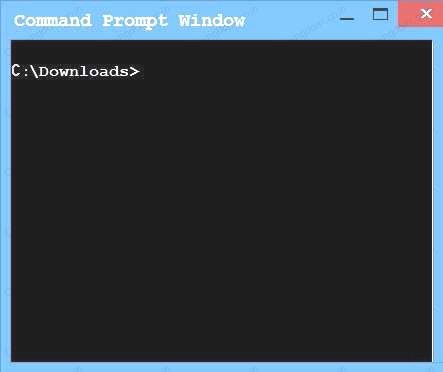
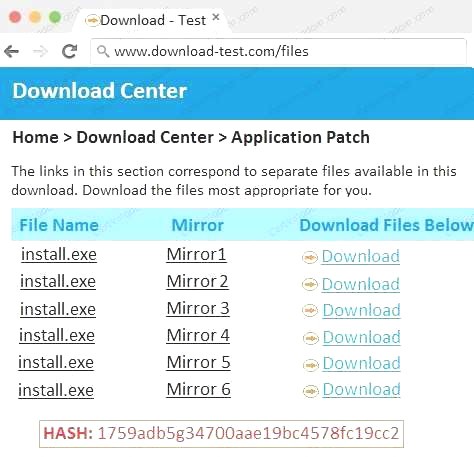
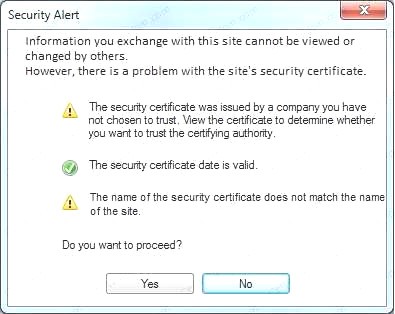
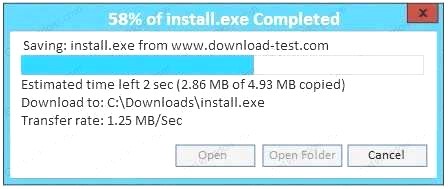
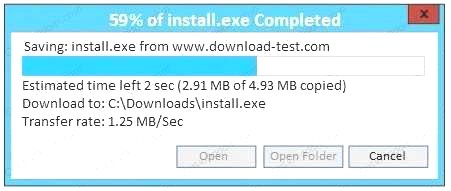
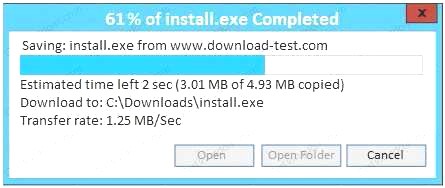
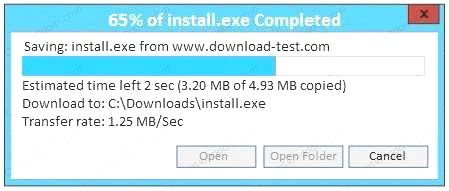
- A. In this case the second link should be used (This may vary in actual exam). The first link showed the following error so it should not be used.
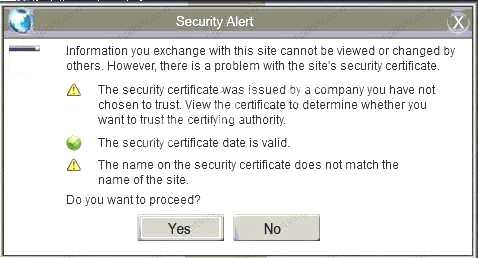 Also, Two of the link choices used HTTP and not HTTPS as shown when hovering over the links as shown:
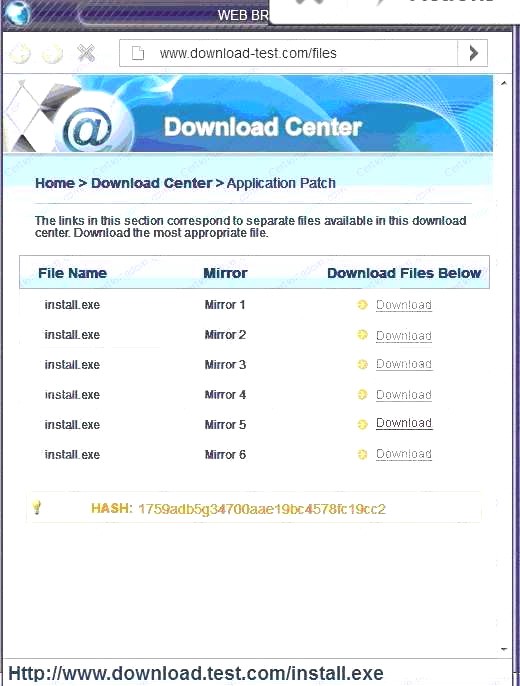 Since we need to do this in the most secure manner possible, they should not be used.Finally, the second link was used and the MD5 utility of MD5sum should be used on the install.exe file as show
 - B. Make sure that the hash matches.
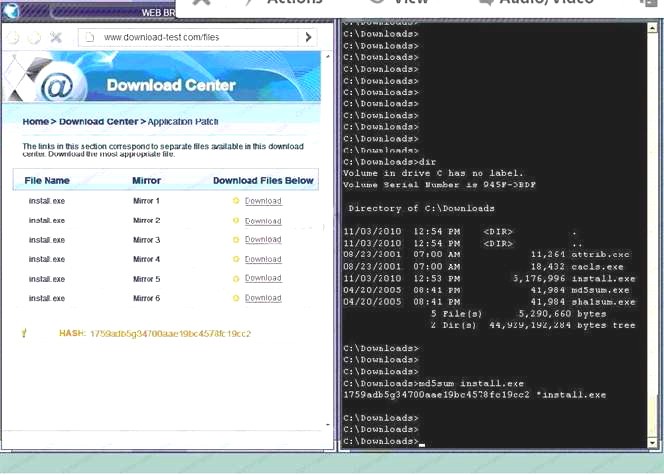 Finally, type in install.exe to install it and make sure there are no signature verification errors.
 - C. In this case the second link should be used (This may vary in actual exam). The first link showed the following error so it should not be used.Also, Two of the link choices used HTTP and not HTTPS as shown when hovering over the links as shown.Since we need to do this in the most secure manner possible, they should not be used.Finally, the second link was used and the MD5 utility of MD5sum should be used on the install.exe file as show
- D. Make sure that the hash matches.Finally, type in install.exe to install it and make sure there are no signature verification error
Answer: A
NEW QUESTION 13
A security architect is implementing security measures in response to an external audit that found vulnerabilities in the corporate collaboration tool suite. The report identified the lack of any mechanism to provide confidentiality for electronic correspondence between users and between users and group mailboxes. Which of the following controls would BEST mitigate the identified vulnerability?
- A. Issue digital certificates to all users, including owners of group mailboxes, and enable S/MIME
- B. Federate with an existing PKI provider, and reject all non-signed emails
- C. Implement two-factor email authentication, and require users to hash all email messages upon receipt
- D. Provide digital certificates to all systems, and eliminate the user group or shared mailboxes
Answer: A
NEW QUESTION 14
A systems security engineer is assisting an organization’s market survey team in reviewing requirements for an upcoming acquisition of mobile devices. The engineer expresses concerns to the survey team about a particular class of devices that uses a separate SoC for baseband radio I/O. For which of the following reasons is the engineer concerned?
- A. These devices can communicate over networks older than HSPA+ and LTE standards, exposing device communications to poor encryptions routines
- B. The organization will be unable to restrict the use of NFC, electromagnetic induction, and Bluetooth technologies
- C. The associated firmware is more likely to remain out of date and potentially vulnerable
- D. The manufacturers of the baseband radios are unable to enforce mandatory access controls within their driver set
Answer: B
NEW QUESTION 15
During a routine network scan, a security administrator discovered an unidentified service running on a new embedded and unmanaged HVAC controller, which is used to monitor the company's datacenter
Port state 161/UDP open 162/UDP open 163/TCP open
The enterprise monitoring service requires SNMP and SNMPTRAP connectivity to operate. Which of the following should the security administrator implement to harden the system?
- A. Patch and restart the unknown services.
- B. Segment and firewall the controller's network
- C. Disable the unidentified service on the controller.
- D. Implement SNMPv3 to secure communication.
- E. Disable TCP/UDP PORTS 161 THROUGH 163
Answer: D
NEW QUESTION 16
A small company is developing a new Internet-facing web application. The security requirements are: Users of the web application must be uniquely identified and authenticated.
Users of the web application will not be added to the company’s directory services. Passwords must not be stored in the code.
Which of the following meets these requirements?
- A. Use OpenID and allow a third party to authenticate users.
- B. Use TLS with a shared client certificate for all users.
- C. Use SAML with federated directory services.
- D. Use Kerberos and browsers that support SAM
Answer: A
Explanation:
Users create accounts by selecting an OpenID identity provider, and then use those accounts to sign onto any website which accepts OpenID authentication.
OpenID is an open standard and decentralized protocol by the non-profit OpenID Foundation that allows users to be authenticated by certain co-operating sites (known as Relying Parties or RP) using a third party service. This eliminates the need for webmasters to provide their own ad hoc systems and allowing users to consolidate their digital identities. In other words, users can log into multiple unrelated websites without having to register with their information over and over again.
Several large organizations either issue or accept OpenIDs on their websites according to the OpenID Foundation: AOL, Blogger, Flickr, France Telecom, Google, Hyves, LiveJournal, Microsoft (provider name Microsoft account), Mixi, Myspace, Novell, Orange, Sears, Sun, Telecom Italia, Universal Music Group, VeriSign, WordPress, and Yahoo!. Other providers include BBC, IBM, PayPal, and Steam. Incorrect Answers:
B: The question states that users of the web application must be uniquely identified and authenticated. A shared client certificate for all users does not meet this requirement.
C: The question states that users of the web application will not be added to the company’s directory services. SAML with federated directory services would require that the users are added to the directory services.
D: The question states that users of the web application must be uniquely identified and authenticated. Kerberos and browsers that support SAML provides no authentication mechanism. References:
https://en.wikipedia.org/wiki/OpenID
NEW QUESTION 17
A breach was caused by an insider threat in which customer PII was compromised. Following the breach, a lead security analyst is asked to determine which vulnerabilities the attacker used to access company resources. Which of the following should the analyst use to remediate the vulnerabilities?
- A. Protocol analyzer
- B. Root cause analyzer
- C. Behavioral analytics
- D. Data leak prevention
Answer: D
NEW QUESTION 18
A security analyst, Ann, states that she believes Internet facing file transfer servers are being attacked. Which of the following is evidence that would aid Ann in making a case to management that action needs to be taken to safeguard these servers?
- A. Provide a report of all the IP addresses that are connecting to the systems and their locations
- B. Establish alerts at a certain threshold to notify the analyst of high activity
- C. Provide a report showing the file transfer logs of the servers
- D. Compare the current activity to the baseline of normal activity
Answer: D
Explanation:
In risk assessment a baseline forms the foundation for how an organization needs to increase or enhance its current level of security. This type of assessment will provide Ann with the necessary information to take to management.
Incorrect Answers:
A: Reports of IP addresses that connect to the systems and their locations does not prove that your servers are being attacked; it just shows who is connecting.
B: High activity does not necessarily mean attacks being carried out.
C: Logs reveal specific activities and the sequence of events that occurred. The file transfer logs of the servers still have to be compared to a baseline of what is normal.
References:
Gregg, Michael, and Billy Haines, CASP CompTIA Advanced Security Practitioner Study Guide, John Wiley & Sons, Indianapolis, 2012, pp. 210, 235
NEW QUESTION 19
An assessor identifies automated methods for identifying security control compliance through validating sensors at the endpoint and at Tier 2. Which of the following practices satisfy continuous monitoring of authorized information systems?
- A. Independent verification and validation
- B. Security test and evaluation
- C. Risk assessment
- D. Ongoing authorization
Answer: D
Explanation:
Ongoing assessment and authorization is often referred to as continuous monitoring. It is a process
that determines whether the set of deployed security controls in an information system continue to be effective with regards to planned and unplanned changes that occur in the system and its environment over time.
Continuous monitoring allows organizations to evaluate the operating effectiveness of controls on or near a real-time basis. Continuous monitoring enables the enterprise to detect control failures quickly because it transpires immediately or closely after events in which the key controls are utilized.
Incorrect Answers:
A: Independent verification and validation (IV&V) is executed by a third party organization not involved in the development of a product. This is not considered continuous monitoring of authorized information systems.
B: Security test and evaluation is not considered continuous monitoring of authorized information systems.
C: Risk assessment is the identification of potential risks and threats. It is not considered continuous monitoring of authorized information systems.
References:
http://www.fedramp.net/ongoHYPERLINK "http://www.fedramp.net/ongoing-assessment-andauthorization- continuous-monitoring"ing-assessment-andHYPERLINK
"http://www.fedramp.net/ongoing-assessment-and-authorization-continuous-monitoring"- authorization-continuous-monitoring https://www.techopedia.com/definition/24836/independent-verification-and-validation--
iHYPERLINK "https://www.techopedia.com/definition/24836/independent-verification-andvalidation-- iv&v"vHYPERLINK "https://www.techopedia.com/definition/24836/independentverification-
and-validation--iv&v"&HYPERLINK "https://www.techopedia.com/definition/24836/independent-verification-and-validation--iv&v"v
Gregg, Michael, and Billy Haines, CASP CompTIA Advanced Security Practitioner Study Guide, John Wiley & Sons, Indianapolis, 2012, pp. 213, 219
NEW QUESTION 20
......
Recommend!! Get the Full CAS-003 dumps in VCE and PDF From Dumps-hub.com, Welcome to Download: https://www.dumps-hub.com/CAS-003-dumps.html (New 555 Q&As Version)